
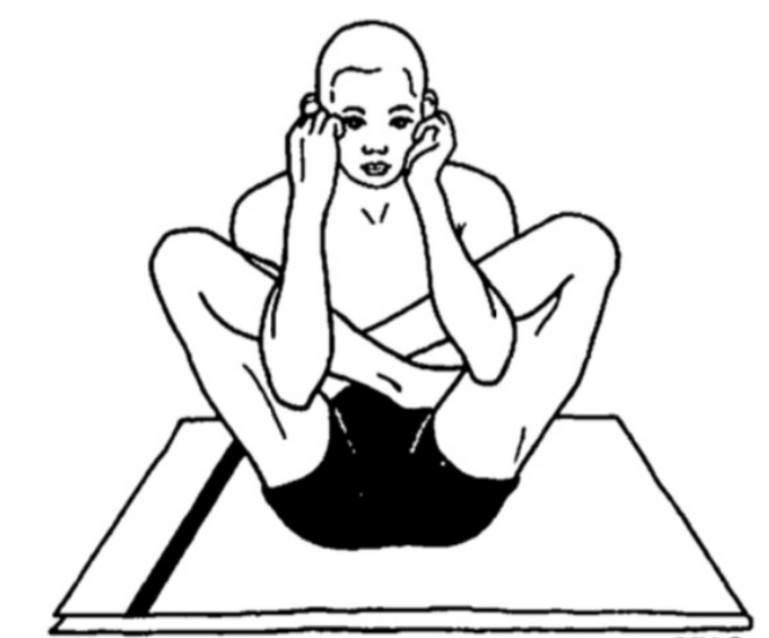
Garbhasana, also known as Womb Pose, or the Uterus Pose, is an advanced seated balancing asana in traditional yoga that mimics the calm, protected state of a fetus inside the uterus. Practicing this pose requires combining flexibility, focused attention, and internal awareness. In Sanskrit, the term
The Sanskrit word “Garbha” means uterus, and “asana” means posture. This asana can calm the nerves, regulate emotions, and strengthen the mind-body connection. Due to its balancing and abdominal compression effects, Garbhasana is often practiced in traditional Hatha Yoga for emotional stability and digestive health.
How to Practice Garbhasana (Womb Pose)
Follow these steps carefully while practicing Garbhasana:
- Start with Padmasana (Lotus Pose) as your opening posture.
- Slowly slide both arms into the gap between your thighs and calves.
- Gently bend your elbows to lift your lower legs, then gradually raise your hands to touch your ears.
- Carefully support your full body’s balance using your coccyx.
- Keeping your spine stable.
- You may adjust whether your eyes are open or closed to suit your personal comfort.
- Hold the final posture for as long as it feels comfortable without strain.
- Exit the pose gradually through sequential steps.
- Repeat the entire practice with your legs crossed in the opposite orientation. All movements throughout the practice must be performed at a slow pace; avoid overly forceful abrupt actions to accommodate the tolerance levels of different practitioners.
This asana may also be practiced while lying on the back for a gentler variation.
Breathing in Garbhasana
Breath awareness is an important aspect of Garbhasana.
- Put your hands to your ears and let out a breath.
- In the final position, breath normally.
- When the posture compress the lungs and abdominal area, respiration naturally becomes shallow.
- The practitioner can keep calm and balance in the pose by breathing smoothly and relaxedly.
Awareness During the Pose
Physical Awareness
Focus your attention on:
- The compression of the abdominal area
- Maintaining body balance
- The natural flow of breath
Spiritual Awareness
Traditionally, awareness is directed toward the Manipura Chakra, the energy center associated with confidence, willpower, digestion, and inner strength
Benefits of Garbhasana
1. Calms the Nervous System and Brain
An overactive or awake mind can be calmed by adopting this posture, which has a beneficial effect on the nervous system. It promotes emotional equilibrium and relaxation.
2. Improves Emotional Equilibrium
Garbhasana fosters a feeling of groundedness and inner security. Consistent practice of this pose may help those who suffer from emotional disorder or excessive anger.
3. Improves Digestion
The digestive organs are gently rubbed and trained by the pelvic squeeze. This stimulus may promote a healthy appetite and digestion while also enhancing digestive fire (Agni).
4. Maintains Adrenal Glands
It has always been thought that the posture helps govern the activity of the adrenal glands, which could enhance emotional regulation and stress management.
5. Enhances Concentration and Balance
Coccyx balancing improves focus, bodily awareness, and general coordination.
6. Increases Self-Awareness
Practitioners may feel increased self-awareness and inner focus by concentrating on breath, balance, and the Manipura Chakra.