Yoga isn’t just about the poses, or asanas. It is a sometimes spiritual, often wellness practice that includes meditation, and pranayama, as well as philosophy and practices that work with more subtle forms of energy. One of these practices is Mudras, an important part of traditional yoga, that uses hand gestures to help focus awareness and balance.
Traditional yoga systems consider Mudras powerful aids for meditation and spirituality and self-development at the highest levels.
Anyone who wishes to acquire a holistic approach to traditional yoga in India would find learning Mudras as an important part of a Yoga Teacher Training in Rishikesh since these practices become alive only in the direct guidance of a qualified yoga teacher.
What is a Mudra in Yoga?
The Sanskrit word mudra is translated as gesture or attitude. Mudras can be described as psychic, emotional, devotional, and aesthetic gestures or attitudes.
Yogis have experienced mudras as attitudes of energy flow, intended to link the individual pranic force with the universal or cosmic force.
According to traditional yoga philosophy, our fingers represent different elements of nature:
- Thumb – Fire element (Agni)
- Index finger – Air element (Vayu)
- Middle finger – Space element (Akasha)
- Ring finger – Earth element (Prithvi)
- Little finger – Water element (Jal)
The Hatha Yoga Pradipika and other yogic texts consider mudra to be a yojana, an independent branch of yoga, requiring a very subtle awareness. Mudras are introduced after some proficiency has been attained in asana, pranayama, bandha, and gross blockages have been removed.
Mudras are higher practices that lead to the awakening of the pranas, psychic powers, on the advanced practitioner.
Mudra and Prana
The attitudes and postures adopted during mudra practices establish a direct link between annamaya kosha, the physical body, manomaya kosha, the mental body, and pranamaya kosha, the energy body. Initially, this enables the practitioner to develop an awareness of the flow of prana in the body.
Ultimately, it establishes pranic balance within koshas and enables the redirection of subtle energy to the upper chakras, inducing higher states of consciousness.
Five Groups of Yoga Mudras
The mudras can be categorized into approximately five groups:
- Hasta (Hand Mudras)
- Mana (Head Mudras)
- Kaya (Postural Mudras)
- Bandha (Lock Mudras)
- Adhara (Perineal Mudras)
Mudras are performed either in combination with or after asana and pranayama.
The Benefits of Mudras
Using mudras brings along the following benefits:
- Expansion of consciousness
- More Powerful Asana and Meditation Practice
- Cross-Connection of Energies
- Greater Concentration
- Internal Physical Relaxation
- The vitality of the Heart
During a 200 Hour Yoga Teacher Training Course, students learn yoga philosophy, meditation, pranayama, asanas, and traditional practices like mudras.
Common Mudras in the Yoga Practice
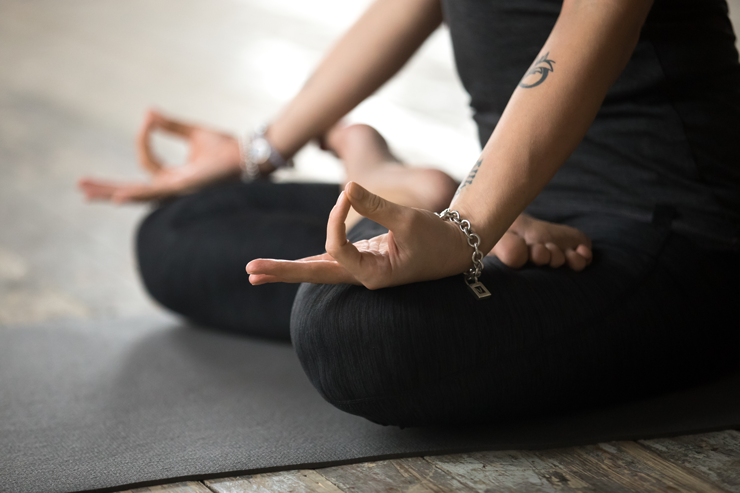
When a yoga class begins, many teachers choose to bring awareness to the sitting posture, straight spine, and breath. Besides getting into the right beginning asana, it is also common to use a mudra already. Especially if the class contains some mantra chanting, meditation, and breath awareness. The most common mudra which is used is called Gyan Mudra or Jana Mudra. Simply relax your hands onto the knees, palms facing up. Now place the index finger towards your thumb so that both fingers touch at the top.
Gyan Mudra is an easy-to-perform mudra that encourages focus and calmness. If the practitioner has reached a certain level of awareness, he or she can feel energy circulating between the index finger and thumb. This mudra is also said to connect the individual to the universal consciousness and energy.
What is your favorite mudra so far?
Learn Mudras from Authentic Yoga Teachers in India
Mastering the understanding of mudras is not limited to knowing a few hand positions. Mudras are integral part of yoga practice that includes asana (posture), pranayama (breath control), meditation, philosophy, and lifestyle.
The Yoga India Foundation showcases the real yoga methodology through its beginner, intermediate, advanced level Yoga Teacher Training Course in India.
Our certified yoga programs and certifications provide real classical yoga training under the supervision of our experienced yoga instructors to our students which provides them the needed confidence to teach yoga professionally.
During a certified yoga teacher training program, students explore various aspects of yoga including:
- Yoga asanas
- Pranayama techniques
- Meditation practices
- Yoga philosophy
- Anatomy and alignment
- Teaching methodology
- Traditional practices like mudras
Whether you are a beginner, yoga practitioner, or someone who wants to become a professional yoga instructor, a 200 Hour Yoga Teacher Training Course can help you build a strong foundation.
Start Your Yoga Journey with Yoga India Foundation
Mudras represent one of the deeper aspects of traditional yoga practice. When combined with meditation, pranayama, and yoga philosophy, they help students develop a more complete understanding of yoga.
If you want to learn authentic yoga practices and become a certified yoga instructor, join Yoga India Foundation’s Yoga Teacher Training course in India.