
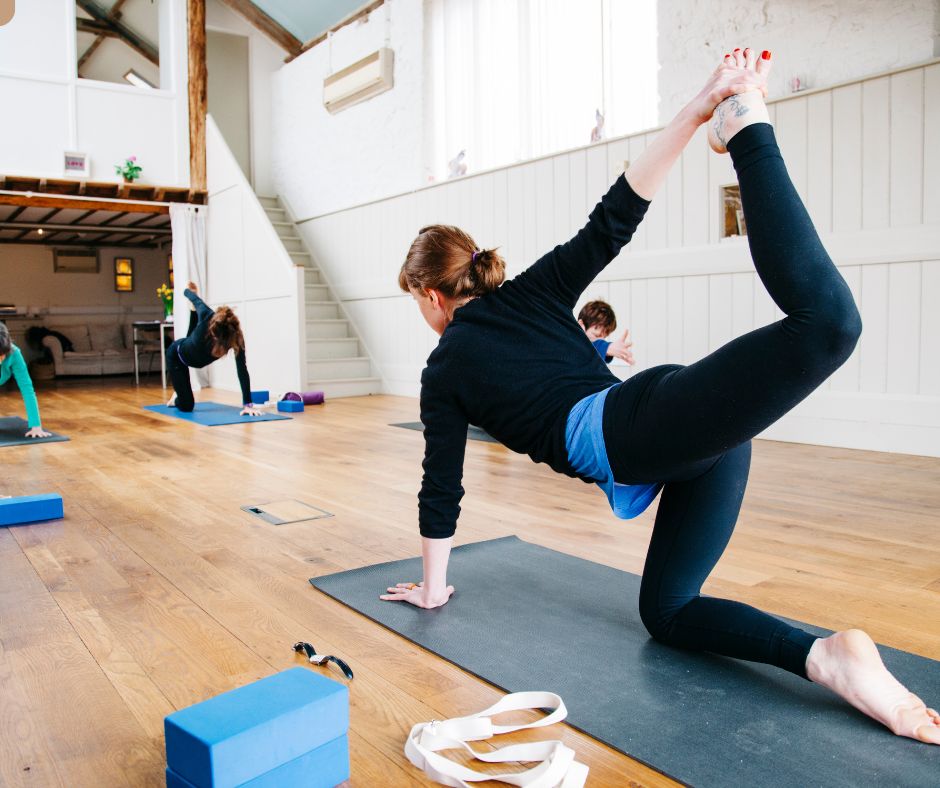
The name Vyaghrasana comes from the Sanskrit words Vyaghra, meaning tiger, and Asana, meaning pose or posture. This asana naturally stretches the muscles and tendons, inspired by the instinctive stretching movements of a tiger—hence its name. It is especially beneficial for the spine, which is vital for overall health. Vyaghrasana also invigorates the abdominal organs and stimulates the spleen and pancreas.
Vyaghrasana (Tiger Pose) is an excellent posture for spinal health and is highly recommended in Yoga Teacher Training courses in India. Derived from traditional Hatha Yoga, this asana helps improve flexibility, balance, and breath control, preparing the body for more advanced yoga postures.
In certified Yoga Teacher Training programs in India, Tiger Pose is taught to enhance spinal mobility, harmonize breath with movement, and promote the therapeutic benefits of asanas.
How to Practice Vyaghrasana
- Begin in Marjari Asana (Cat Pose) with a neutral spine and the gaze directed forward.
- Relax the body and observe the natural flow of the breath.
- Gently hollow the back and slowly extend the right leg upward and backward.
- Bend the right knee.
- Lift the head and raise the gaze toward the sky, bringing the toes toward the back of the head.
- Hold the position for a few moments while maintaining the breath.
- Straighten the right leg again, then bend the knee and swing the leg forward under the hips.
- Simultaneously round the back and bring the head down, drawing the knee toward the nose.
- Ensure that the foot does not touch the floor.
- Press the thigh toward the chest.
- Hold this position for at least one second with the breath gently held out.
- Extend the leg backward again and repeat the slow, controlled swinging movement.
- After completing one side, rest briefly in Marjari Asana.
- Repeat the exercise with the opposite leg.
Breathing Pattern
- Inhale while extending the leg backward.
- Retain the breath briefly in the final backward stretch.
- Exhale as you bring the knee toward the chest.
Duration
Practice 5 rounds on each leg, maintaining awareness, balance, and control.
Awareness
Physical Awareness:
Move the body forward and backward, stretching the spine and legs while alternately compressing the abdomen and chest (as in Padahastasana). Maintain balance, coordination, and synchronization of breath and movement.
Spiritual Awareness:
Focus on the Swadhisthana Chakra, associated with creativity, vitality, and reproductive health.
Benefits of Vyaghrasana (Tiger Pose)
- Stretches and relaxes the back through controlled bending and extension
- Stimulates and strengthens the spinal nerves
- Relaxes the sciatic nerve, helping to relieve sciatica discomfort
- Lengthens the legs and hip flexors
- Tones the female reproductive organs
- Especially beneficial for women after childbirth, including multiple births
- Strengthens and tones abdominal muscles and aids digestion
- Promotes healthy blood circulation throughout the body
- Helps reduce excess weight around the hips and thighs
Importance in Yoga Teacher Training in India
- In Hatha Yoga Teacher Training, Tiger Pose is commonly taught as a preparatory pose for advanced backbends.
- Enhances mind–body coordination, an essential aspect of professional yoga teacher training in India.
- Helps trainee teachers learn safe spinal movement and injury prevention techniques.
Contraindications & Precautions
- Avoid this asana if you have a severe backache, slipped disc, or wrist injury.
- Pregnant practitioners should perform this pose only under the supervision of a qualified yoga teacher.
- Practice with full mental awareness of the body and movement, as emphasized in traditional yoga teacher training schools in India.