
Welcome to India: A Country, Many Worlds
India is a country of many destinations, and you can see a lot in a single trip. In this incredible land you can watch the sunrise over the Taj Mahal in Agra, explore the forts of Rajasthan, take a houseboat on the Kerala backwaters, sample cuisines every few hundred kilometers, and see the Himalayas. You can even visit the places where the sacred rivers of India begin, and see the ancient temples in the Himalayas.
There is always a perfect destination in India for every month of the year. The Himalayas are beautiful in the summer, and the deserts of Rajasthan are beautiful in the winter. South India remains green and lush in the monsoons. The secret is to understand which destinations are best visited in which seasons.
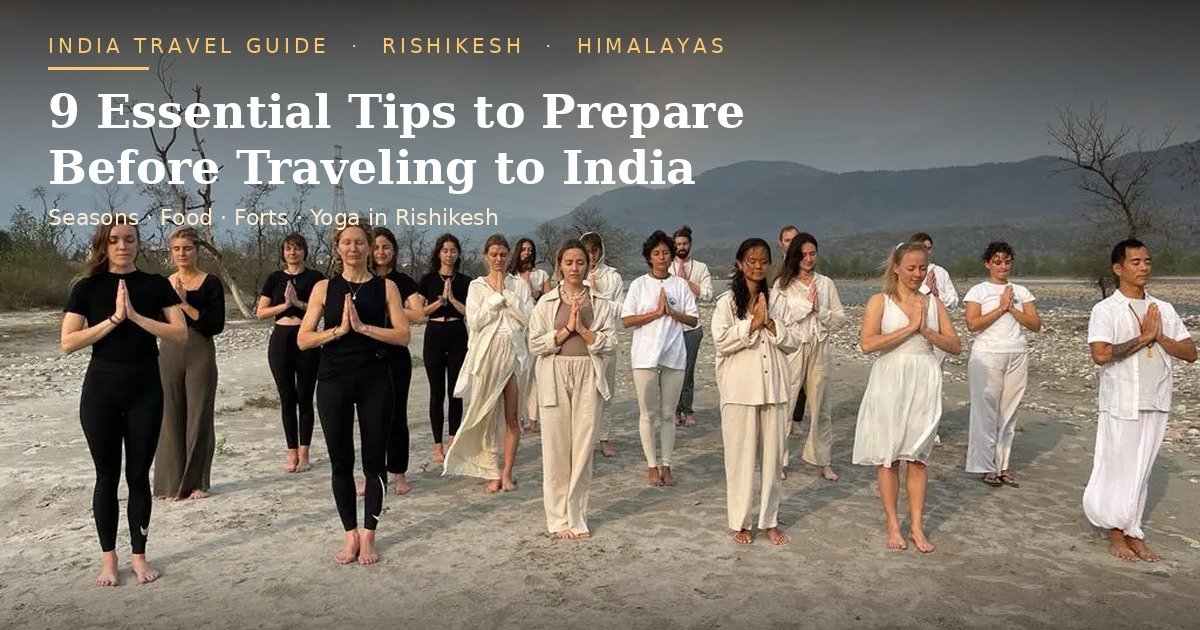
You will not find anywhere better to show this than the beautiful town of Rishikesh in Uttarakhand, which is known as the yoga capital of the world. The Ganges flows through the town, and adventurous travelers can even go rafting in the Holy Ganges. Rishikesh is known for its ashrams, and meditation and yoga centers. The town gives you the perfect environment and opportunity to take a break from the city, and practice meditation and yoga.
The Uttarakhand region is gorgeous all year round, with mountains on every side. The region is bustling with travelers all year round. No matter when you choose to visit Uttarakhand, adventure is waiting for you.
Here are the 9 essential tips to get you ready.
Tip 1: Sort Your Visa and Travel Documents Early
Most travellers need a visa to enter India, and many nationalities can apply for an e-Visa online. Rules, fees, and eligible countries change from time to time, so always confirm on the official Indian government visa website before booking flights.
- Keep your passport valid for at least six months.
- Carry printed and digital copies of your visa, tickets, and hotel bookings.
- Buy travel insurance that covers health and trip changes.
- Share your itinerary with a family member or friend back home.
Tip 2: Choose Your Season and Pack Accordingly
India welcomes visitors all year. Each season shows a different face of the country.
Winter (October to February): The Classic Season
The most popular time to visit. Days are pleasant and nights are cool. It is perfect for Rishikesh, where yoga, ashrams, and the Ganga are at their most peaceful, plus Rajasthan’s forts and deserts, the Taj Mahal, Goa’s beaches.
- Pack: light layers, a warm jacket or shawl for evenings, comfortable walking shoes. Nights in the desert and in the north can get properly cold.
Summer (March to June): Heat in the Plains, Cool in the Mountains
he plains and deserts get very hot, but this is the best time for the mountains. Uttarakhand, Himachal Pradesh, and Ladakh are at their finest.
- Pack: cotton and linen clothes, sunglasses, a hat, strong sunscreen, a refillable water bottle, and a light fleece if you are heading to the hills.
Monsoon (July to September): Green and Dramatic
Rain turns the country lush and emerald. Waterfalls roar, crowds thin out, and prices drop. It is lovely for the Valley of Flowers in Uttarakhand and the misty green hills of Rishikesh.
- Pack: a light rain jacket, quick-dry clothes, waterproof bag covers, sandals with grip, and insect repellent.
Autumn (October to November): Clear Skies and Festivals
The air is fresh, the skies are clear, and India lights up with festivals such as Diwali and Dussehra. It is a wonderful time for almost everywhere.
- Pack: light layers and a scarf. Book early, because festival season is busy.
Quick rule: Heat in the plains? Go to the mountains. Cold in the north? Head south or to the desert. India always has a perfect corner for you.
Uttarakhand and Rishikesh: A Good Choice in Every Season
You can visit Uttarakhand all year-round if you are prepared for the weather!
- Winter (Nov-Feb): The weather in Uttarakhand is very cold and clear with higher hills having a covering of snow. Perfect for deep practice and meditation, with fewer visitors. Please make sure to bring layers.
- Spring (Mar-Apr): Spring brings out the flowers in Uttarakhand and this is a wonderful time for a yoga teacher training.
- Summer (May-Jun): Rishikesh is little warm during the summer months, and there is cooler, thin air in the higher mountains. Use this time for practice early in the day and make sure to bring layers, sunscreen, and a hat.
- Monsoon (Jul-Sep): Uttarakhand is very green and has a misty, cool climate. The practice is best indoors during this time and be aware that mountain roads may be blocked due to weather.
- Autumn (Oct-Nov): Practice has beautiful views of the mountains during this time.
Tip 3: Look After Your Health
- See a travel clinic 4 to 6 weeks prior to your departure to talk about what vaccines you need for your trip.
- Drink only bottled or filtered water. Avoid ice from unknown sources.
- Take a small first aid kit. It should include: antacids, anti-diarrheals, plasters, antiseptic, and your normal prescription meds.
- Use hand sanitizer and wash your hands frequently.
- Ease into the new food. Your stomach will take a few days to get used to the new food.
Tip 4: Understand India's Regions and Cultures
India’s culture changes from state to state. Language, clothing, festivals, architecture, and food all shift as you travel. Here is a simple guide.
North India: Forts, Mountains, and Spirituality
Home to Delhi, Agra, Rajasthan, Punjab, Himachal Pradesh, and Uttarakhand. Expect Mughal monuments, royal palaces, Himalayan villages and spiritual towns. Food is rich and hearty with lots of butter, breads, and tandoor dishes.
South India: Temples, Backwaters, and Coconut Everything
Tamil Nadu, Karnataka, and Andhra Pradesh. Think grand Dravidian temples, tea hills, houseboats, and beaches. Food is lighter and spicier, built around rice, lentils, coconut, and curry leaves.
East India: Art, Tea, and Tradition
West Bengal, Odisha, Assam, and the north-east. Expect literature, festivals like Durga Puja, ancient temples, tea gardens, and wildlife. Fish, rice, and sweets are the stars.
West India: Deserts, Beaches, and Bollywood
Rajasthan, Gujarat, Maharashtra, and Goa. From the Thar Desert to Mumbai and the coast of Goa, this region of India is eclectic. Sampling the local cuisine throughout is a feast. Try Rajasthani dal baati or Gujarati thali and don’t miss street side snacks in Maharashtra.
Tip 5. Prepare for the Food: A Different Flavor in Every Region
- North: Rich gravies, naan, parathas, paneer dishes, chole bhature, and street food like chaat
- South: Rice-based meals, dosa, idli, sambar, coconut-based curries and filter coffee
- East: Fish and rice in Bengal, sweets like rasgulla and sandesh, and momos in the Northeast and Sikkim
- West: Rajasthani dal baati churma, Gujarati thali (slightly sweet), Maharashtrian vada pav and Goan seafood
Food safety tips:
- Drink only filtered or sealed bottled water and avoid ice in cheap places
- Eat hot food in busy restaurants
- Ask for “less spicy” to slowly introduce spicy food
- Stomach meds and oral rehydration salts are a good idea to carry with you
- India is very vegetarian friendly so vegetarians and vegans are well covered. Rishikesh is very sattvic and yogic especially for vegetarians.
Eating in Rishikesh and Uttarakhand
Rishikesh is unique from other cities in India because it has a strong spiritual and tourism economy. Due to this, many of the restaurants don’t serve meat and are mostly vegetarian. Because of this, there is a lot of vegan and sattvic food available.
- Local Garhwali Food: Mandua roti (finger millet rotis) and jhangora kheer (sweet pudding made of finger millet), aloo ke gutke (peas and potatoes cooked in a spicy gravy with a mixture of crushed spices), and khatti (sweet and sour) dal.
- Yogic and Sattvic Meals: You can order rice, khichdi, dal, herbal tea, and fresh fruit.
- Traveler Cafes: Wood-fired pizzas and vegan smoothies. Also, you can find German bakeries, Tibetan momos, and Israeli breakfasts.
- Ayurvedic Food: Most schools and retreats serve food to balance body and mind.
Tip 6: Handle Money and Stay Connected
- UPI digital payments are used by many people in India. Be sure to confirm with your visitor setup if UPI payments are enabled, and carry cash as a backup.
- Carry small notes for tips and purchases from small shops and tuk tuks.
- Buy an Indian e-sim (local SIM card) for transport, maps and rides from the airport or from an authorized dealer.
- Download offline maps and a translation app before you go.
- Bargain with a smile in the markets.
Tip 7: Dress Modestly and Respect Local Customs
India is deeply traditional and spiritual. A little respect goes a long way.
- Cover shoulders and knees, especially at temples, gurdwaras, and ashrams.
- Remove your shoes before entering temples and many homes.
- Carry a light scarf. It is useful for sun, dust, and sacred places.
- Ask before photographing people or religious ceremonies.
- Greet with a smile and a “Namaste.”
Tip 8: Travel Smart and Stay Safe, Especially as a Solo Female Traveller
India is welcoming, but safety depends a lot on where you are. Choose your destinations thoughtfully
Safer Choices for Solo Women
Places like Rishikesh, Uttarakhand and some places in Himachal Pradesh are some of the most comfortable and popular places for solo female travellers. The presence of spiritual towns and communities makes it easier to socialize and feel at home. Use your common sense wherever you go. Mingle with locals, go for small talks and evenings here will be calm and relaxed for you.
Be More Careful in Big Cities
Busy metros such as Delhi are fascinating but need more caution, especially late at night. Crowds, traffic, and unfamiliar areas can be overwhelming.
Safety checklist
- Avoid walking alone late at night in big cities. Use trusted ride apps or hotel-arranged taxis.
- Share your live location with someone you trust.
- Book well-reviewed stays with good ratings from female travellers.
- Trust your instincts, and do not be afraid to say no firmly.
- Keep copies of important documents and a power bank.
- Save emergency numbers: 112 is India’s all-purpose emergency number.
Tip 9: Plan Your Pace and Book Ahead
India is huge, and distances are bigger than they look on a map. Do not try to see everything.
- Pick 2 or 3 regions per trip rather than the whole country.
- Book popular trains well in advance. They are a wonderful way to see the country.
- Use domestic flights for long distances.
- Reserve tickets and guides for the Taj Mahal and major forts online when possible.
- Leave a few free days. The best moments in India are often unplanned.
Uttarakhand, Rishikesh: The Best Choice for Yoga, Mountains, and Peace
Rishikesh lies at the foothills of the Himalayas on the banks of the Ganges and has rightfully earned the moniker of ‘Yoga Capital of the World.’ Many worldwide travelers take part in various yoga teacher training courses and other spiritual studies and practices here.
Why Rishikesh is a top choice:
- Deep yoga tradition, with authentic teachers and many reputable schools
- Peaceful setting with river, forest and mountain views
- Courses for all levels, from beginner classes to 200 hour yoga teacher training and 300-hour teacher training
- Ganga aarti, satsang, kirtan and meditation in the evenings
- Affordable stay and plenty of vegetarian, yoga-friendly cafes
What Makes Rishikesh Special for Yoga Seekers
- Many schools and experienced teachers: Rishikesh is home to several yoga schools and ashrams, with plenty of experienced and traditional teachers to learn from. Take the time to ask about Yoga Teacher Training in India and lineages before making a commitment.
- Clean and spiritual atmosphere: Rishikesh is a dry town and non-veg food is generally not found in the main area, and around the ashrams which helps in keeping the environment calm and focused on spiritual life.
- The Ganges: The water is clean and cold here, and you can meditate on the sound of the river while participating in the daily evening Ganga Aarti.
- Vegetarian and vegan food: There are ashram meals to tasty, healthy and creative cafes.
- Diverse culture: You have traditional Himalayan Garhwali culture, the lifestyle of ashrams and travelers from all over the world, so you get to experience diverse kinds of music, art and food.
- Scenic places: Triveni ghat, Laxman and Ram Jhula, Beatles Ashram, Kunjapuri temple for sunrise, Neelkanth Mahadev temple and many waterfalls.
- Adventure: You can do white water rafting on the Ganga and enjoy hiking and waterfalls.
Why Uttarakhand is for everyone
If there is one state that suits almost every traveller, it is Uttarakhand, often called Devbhoomi, the “Land of the Gods.” Whether you want yoga, a retreat, mountain views, spiritual calm, or simple fresh air, Uttarakhand delivers.
- Mountains: Himalayan peaks, alpine meadows, and quiet villages.
- Spirituality: the Char Dham pilgrimage sites, temples, and ancient ashrams.
- Yoga and retreats: the best concentration of authentic yoga teaching in the world.
- Adventure: trekking, river rafting, and camping.
Every season works:
- Spring and autumn: clear skies, blooming valleys, ideal trekking weather.
- Summer: a cool escape from the heat of the plains.
- Monsoon: misty green hills and the Valley of Flowers in bloom.
- Winter: crisp air and snow in higher areas, plus a peaceful Rishikesh and Haridwar.
The gateway cities Haridwar and Rishikesh are easy to reach from Delhi by road, train, or a short flight to Dehradun.
A Pure, Peaceful Atmosphere
Rishikesh is a holy town, and alcohol and non-vegetarian food are not served in the town. That gives it a calm, clean, spiritual atmosphere that is hard to find elsewhere. Visitors come here to reset their minds and bodies, and the clear, sacred Ganga beside you makes it even more special.
Food in Rishikesh
Because it is a world-famous tourist and yoga destination, Rishikesh has a food scene unlike the rest of India:
- Fresh vegan and vegetarian cafes everywhere
- Healthy bowls, smoothies, salads, and organic juices
- Traditional Indian sattvic meals such as dal, rice, and seasonal sabzi
- International options such as German bakeries, Italian pasta, and Israeli dishes
- Riverside cafes with Ganga views and live acoustic music
Final Thoughts: Come to India with an Open Heart
Prepare for the unexpected in India. With the right preparation, you’ll be able to savor the many surprises that India has to offer.
To recap, prepare your documents, pick the right season, protect your health, respect local culture, eat adventurously, stay safe, and slow down. No matter your dream destination in India, the Taj Mahal, the forts of Rajasthan, or a peaceful yoga retreat in Rishikesh and Uttarakhand, India is ready to welcome you in every season.
Get ready to celebrate a new year in India!