
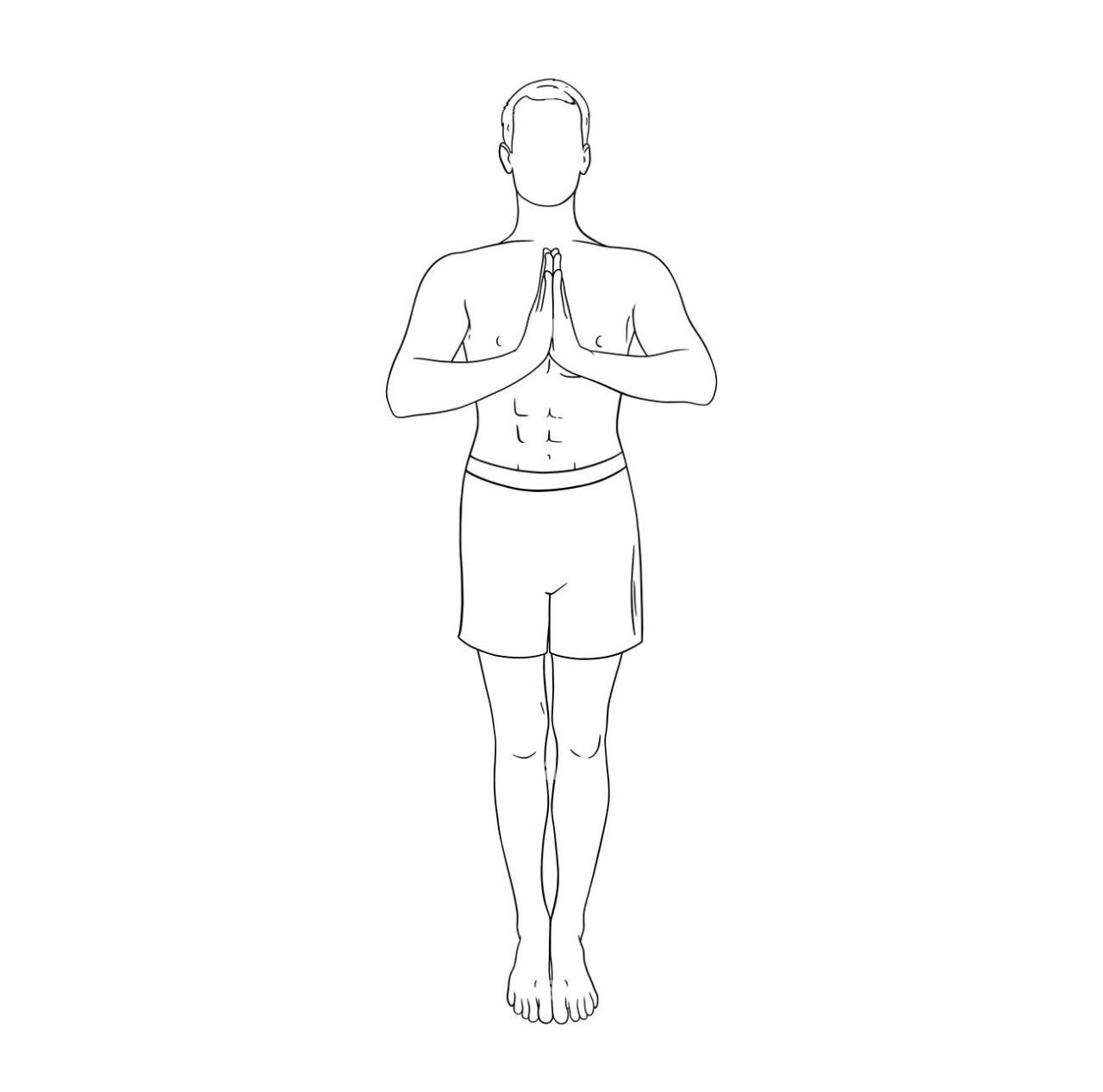
Pranamasana, commonly known as the Prayer Pose, is the fixed opening and closing posture in the Surya Namaskar sequence, with origins rooted in ancient Indian tradition. To perform this posture, practitioners hold Anjali Mudra at the level of the heart center; this practice evokes a sense of reverence and inward-focused concentration. In yogic philosophy, this posture is believed to activate the Anahata chakra, cultivating love, compassion, and inner peace.
The Anjali Mudra paired with this posture is often accompanied by the greeting Namaste, which translates to “I honor the divine within you with the divine that resides within me”. This meaning aligns with a core tenet of yogic philosophy that recognizes a divine spark in all living beings, and the posture has long been a central component of yoga, meditation, and spiritual practice in ancient India.
How to Practice Pranamasana (Prayer Pose)
- With your feet together and your spine straight, stand up straight.
- Close your eyes and let your body unwind.
- In Namaskara Mudra, slowly bend your elbows and bring your palms together in front of your chest.
- In the center of the heart, press the palms equally against one another.
- Honor the sun in your mind, as it is the source of all life.
- Maintain the thumbs slightly touching the sternum and the fingers pointed upward.
- Evenly distribute your body’s weight across both feet.
- Hold the pose with complete awareness while breathing regularly.
BREATHING: Breathe normally.
AWARENESS: Physical — on the chest area. Spiritual — on Anahata chakra.
MANTRA: Om Mitraya Namaha — salutations to the friend of all.
Benefits of Pranamasana
- Creates a calm and focused state in advance of the practice.
- The Anahata (heart) chakra is activated and balanced.
- Promotes inner serenity, love, and compassion.
- Enhances body awareness and posture
- Lessens mental unrest and calms the psyche
- Fosters an attitude of respect and introspection.
- Promotes spiritual connection and a state of meditation
Contra-indications of Pranamasana:
The yoga asana Pranamasana is a gentle standing pose suitable for the vast majority of practitioners. However, two high-risk groups must adopt dedicated adjustment plans for their own use. All practitioners must abide by universal baseline safety requirements for practice, and all adjustment plans are clear, specific, and can be directly implemented in practice.
How to Deepen Your Pranamasana Practice
Many people who first encounter the yoga pose Pranamasana think it is so simple that it is not worth any attention. Only through consistent practice with mindfulness can one uncover its deeply hidden core value. When practicing, first adjust into a stable basic standing position, then gradually draw your scattered attention inward. If you maintain this practice long-term, it will act as a reset switch for your body and mind, helping you smoothly shift from the busy pace of daily life to the calm, aware state of yogic consciousness.
Begin Your Yogic Journey with Expert Guidance
Yoga is far more than a series of physical postures — it is a complete science of living that touches every dimension of your being. At Yoga India Foundation, we guide students from their very first breath in Pranamasana all the way through the profound depths of yogic philosophy, pranayama, and meditation. Our Yoga Teacher Training in India is designed for those who wish to build a strong, authentic foundation — whether your goal is personal transformation or sharing the gift of yoga with others. Rooted in the traditional teachings of Rishikesh, we offer an experience that goes far beyond the mat. Take the step that changes everything.