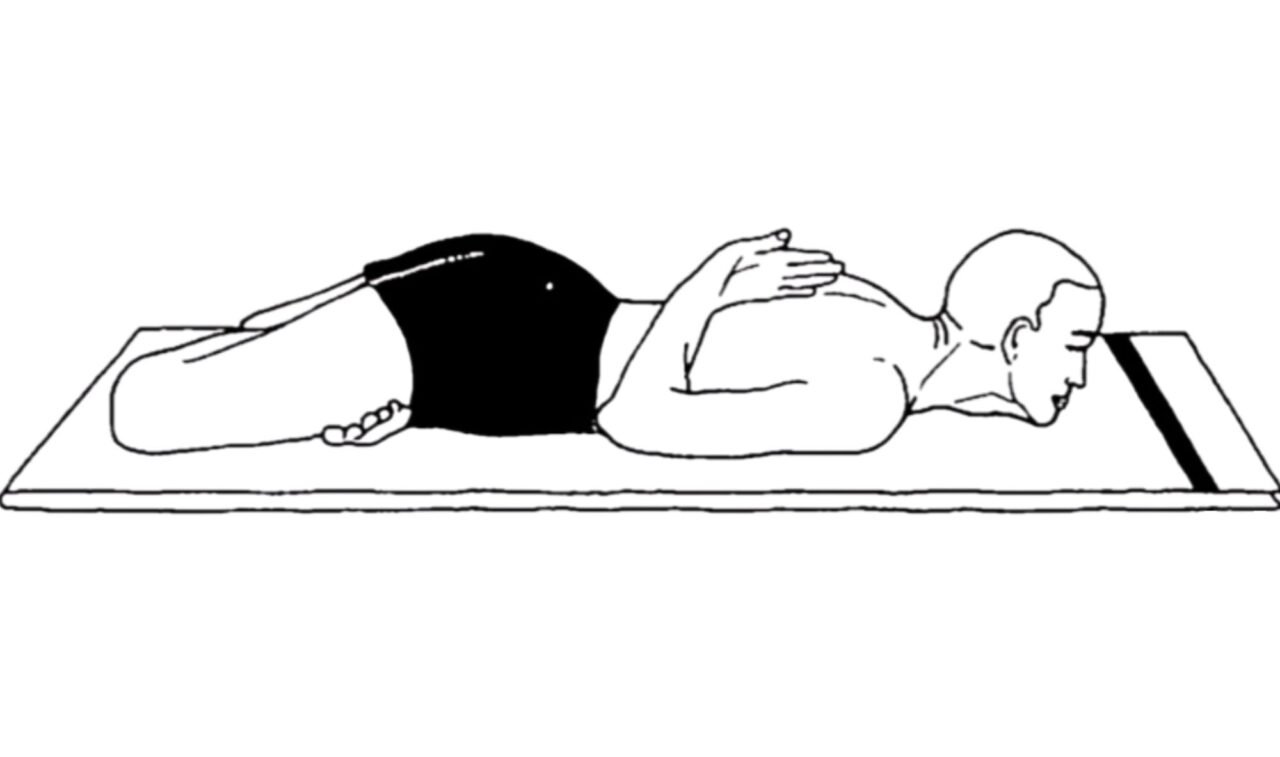
Many yoga poses ask us to stretch, balance or build strength.They also work to strengthen our bodies. Gupta Padmasana focuses on something different. To get in to this posture you start by sitting in lotus position. From there you bend over, folding forward toward the floor. In this posture, your legs stay in lotus and your chest and face come down, releasing toward the floor. This “hides” or covers the lotus position. It is because of this that the posture is named Gupta Padmasana. Gupta means hidden and Padmasana means lotus position.
This guide describes how to get in to this position, how to practice it and the benefits it carries. Also included is how to use this practice to reach a deeper awareness and rest. Posture practice like this is very common and practiced extensively as part of yoga teacher training in Rishikesh. There it is studied as both a physical shape and a tool to help still the mind.
What is Gupta Padmasana?
Gupta Padmasana is a prone variation of the classic lotus pose. Because the body rests face down with the hands joined behind the back, the pose feels grounding and inward. It works well as a relaxation posture and as a quiet counterpose to seated meditation.
The traditional teaching connects it with anahata chakra, the heart centre, which is why the pose is often described as bringing peace, stability and emotional balance.
Before You Begin
In Gupta Padmasana, the legs must be in full lotus. If your knees, hips or ankles are not ready for padmasana, don’t attempt the full posture. Continue practicing simpler postures first, as well as hip opening work. For the full expression of Gupta Padmasana, use 2 or 3 folded blankets and position your head to rest on them. Place a folded blanket under your knees for support. A non-slip mat is also useful.
How to Practice Gupta Padmasana: Step by Step
- Come into padmasana. Sit tall with legs crossed in lotus.
- Place your hands in front of you. Set your palms on the ground and slide them forward to your knees.
- Pushing with your arms, lift your buttocks up to rest on your knees.
- Lower your upper body as you control your breath and release the lower body to lie prone on the floor.
- Place your chin on the ground and keep your neck long. Relax your face.
- Bring your palms together behind your back and pray. Your fingers can point up or down and middle fingers may touch the back of your head if it is available to you.
- Allow your eyes to close and release. Soften and relax the body fully.
- To come out of the position push your hands into the ground to lift your body and return to a sitting position. Reverse the position of your legs and repeat.
Breathing
Keep the breath normal and unrestrained in the final position. There is no need to deepen, hold or control it. Simply let it move on its own.
Duration
Stay in the pose for as long as it feels comfortable. This is a resting posture, so there is no target time. Come out when the body asks you to.
Awareness
- Physical awareness: Rest your attention on the relaxation of the whole body and mind, and on the natural flow of the breath.
- Spiritual awareness: Bring your attention to anahata chakra, the heart centre.
Benefits of Gupta Padmasana
- Helps spinal alignment. This pose helps to correct postural defects of the spine and aids in maintaining steady meditative posture.
- Prepares body for meditation. A correctly aligned spine is a boost for meditation.
- Works as a relaxation pose. The prone position welcomes rest and release.
- Promotes emotional stability, inner peace and calmness. Focus on the heart helps steady the mind.
Variation for Complete Relaxation
If you want a deeper level of rest, try this gentler version:
- Let the hands rest on the floor beside the body with the palms facing up.
- Turn the head to one side and rest one cheek on the floor.
- After some time, gently turn the head to the other side and stay for an equal length of time.
This keeps both sides of the neck balanced and makes the pose even more restful.
Frequently Asked Questions
Gupta Padmasana, or hidden lotus pose, is a prone variation of padmasana. From lotus, you lower the front of the body to the floor, rest the chin down and join the palms behind the back.
It is better suited to students who can already sit comfortably in padmasana. Beginners should first build flexibility in the hips, knees and ankles with simpler seated poses under the guidance of a qualified teacher.
Hold it for as long as it feels comfortable. There is no fixed time, because the pose is meant for relaxation.
Breathe normally and without effort in the final position.
The traditional focus is anahata chakra, the heart centre.
Yes. By helping correct postural defects of the spine, it supports a steadier, more productive meditation posture. Its calming effect on the mind also helps.
Learn Yoga in Rishikesh
Poses like Gupta Padmasana are best learned with personal guidance, especially when lotus-based postures are involved. At Yoga India Foundation, our 200 hour yoga teacher training in India and other Yoga courses in Rishikesh cover asana, alignment, meditation and yogic philosophy in an authentic setting.
Ready to deepen your practice? Enquire about our yoga teacher training in India or contact us today to find the course that fits you.