Food is one of the bigger concerns for those doing yoga teacher training in Rishikesh, and of course, that’s understandable. While food is fuel at any other event, at yoga retreats, it’s part of the practice. So, in this article, we’ll look at what the gluten-free diet entails, why the gluten-free diet is important for yogis, and how Rishikesh ashrams and yoga schools manage dietary restrictions, such as vegan, gluten-free, and Sattvic diets.
Understanding a Gluten-Free Diet
Gluten is a protein in wheat, barley, rye, and some processed grains. A gluten free diet is one that does not consume any of these products, and in place of gluten containing grains, relies abundantly on grains, legumes, fruits and vegetables that do not contain gluten, e.g. rice, millet, quinoa, buckwheat, lentils, etc.
There are various reasons one might enjoy a gluten free diet.
- Celiac disease is one of these reasons and it involves digestive distress, bloating, and inflammation. Non-celiac gluten sensitivity shares some of these symptoms.
- Gluten free diets are also popular because people report feeling less sluggish with the absence of gluten in their diets.
- In the case of yogic philosophy, some try to avoid heavyweight and processed products in their diet in favor of lighter and more processed grains. This helps in balancing the diet for more practice and meditation.
Gluten Sensitivity: A Growing Concern in India and Internationally
In recent years, awareness of gluten-related health issues has increased substantially across India and many other countries around the world. Within India itself, celiac disease and non-celiac gluten sensitivity were widely underdiagnosed for a long period prior to this shift. As medical understanding of these conditions has improved and diagnostic testing has become widely accessible, the number of people affected has far outstripped earlier projections, with cases most heavily concentrated in northern India, where wheat-based staple foods such as roti and paratha are commonly consumed; over the past two decades, the United States, the United Kingdom, and many European countries have also seen a sharp rise in confirmed cases, which has driven a dramatic surge in demand for gluten-free options at restaurants, retreat centers, and tourist destinations.
Common Foods That Contain Gluten
There are many foods that contain gluten that can be found in both Western and Indian cuisines:
- Wheat-based foods – all forms of flatbreads (including roti and chapati), crackers, most baked goods (including bread), pasta and noodles
- Barley – present in some soups, beverages, and processed foods
- Rye – present in some breads and crackers
- Semolina, and sooji – used in some Indian foods and sweets (in particular upma and halwa)
- Processed and packaged foods – many snack foods, sauces, (including salad dressings) and soy sauce contain wheat-based thickeners and fillers
- Beverages and malted drinks – are commonly produced from barley
This is something to be especially aware of if you are traveling to Rishikesh. Though lentils and rice-based foods are gluten-free, many foods (including common Indian snacks and breakfasts) that are served at cafes contain gluten (including foods made from semolina). It is very important to communicate your needs to the yoga school’s kitchen and not make any assumptions when it comes to certain dishes.
What Is Vegan Food?
Vegan foods are completely free of any ingredients that contain any animal products or byproducts. This means that any and all meat, fish, eggs, dairy, honey, and even certain artificial food colorings and colorings that are not vegan are excluded. Vegan foods consist of fruit, vegetables, grains, legumes, nuts, seeds, and plant-based oils.
For many yogis, veganism is compatible with the yogic principle of ahimsa, or non-violence. There are many motivations for following a vegan lifestyle, such as the commitment to less harm to animals, and for some people, using a more sustainable, planet-friendly food source.
There are some important distinctions to be made when talking about a vegan lifestyle.
- Vegan vs. vegetarian — vegetarian diets typically still include dairy and eggs; vegan excludes these entirely.
- Vegan vs. Sattvic — these overlap heavily but aren’t identical. Sattvic food is usually vegetarian (it can include dairy like milk, ghee, or fresh paneer) and avoids certain “stimulating” plant foods too, like onion and garlic. Vegan food removes all animal products but doesn’t necessarily avoid onion or garlic.
- Vegan in Rishikesh — because so much of traditional Indian and Ayurvedic cooking is plant-based by default (dal, rice, vegetable curries, chapati made without dairy), Rishikesh kitchens are generally well-equipped to serve vegan meals. The main adjustment is usually swapping ghee for oil and skipping dairy-based items like paneer, curd, or milk-based chai.
Why Vegan and Gluten-Free Diets Are Gaining Popularity Among Yoga Practitioners
Rising popularity of vegan and gluten-free diets among yogis is unsurprising, they fit in with yoga philosophy and principles well. Many people practicing yoga feel that a lighter and more plant based diet encourages a clearer frame of mind and a deeper sense of focus, both of which help with their practice of yoga and meditation. Many of those practicing yoga are drawn to veganism as a result of the principle of ‘ahimsa’ (non-violence) as it correlates with extending ethics from practice into their diets. Now consider an awareness of gluten sensitivity in the west alongside improved access to vegan staples in small towns, and the positive impact of a holistic lifestyle encouraged by social media, and one can truly understand why so many of those visiting Rishikesh are eager and anticipating this style of eating and diet.
What Is Sattvic Food, and Why Does It Matter in Yoga?
The sattvic diet originates from the traditions of Ayurveda and yoga. In Ayurveda, all foods are classified into three property categories:
- The Sattvic type, which is pure, light, and energizing;
- The Rajasic type, which is stimulating, spicy, and excessively rich; and
- The Tamasic type, which is heavy, spoiled, and low in energy.
Ingredients allowed for this diet include fresh fruits and vegetables, whole grains, legumes, nuts, moderate amounts of fresh dairy products, and mild spices. Ingredients prohibited under this diet are onions, garlic, excess caffeine, alcohol, processed foods, and meat. This diet can regulate a person’s physical and mental state, and provide the clarity and focus required for yoga and meditation practice.
Do Yoga Schools in Rishikesh Accommodate These Diets?
The good news: for several reasons, Rishikesh is quite possibly the best destination for a yoga retreat catering for special dietary requirements.
- Vegan diets – As a result of the principles of ahimsa (non-violence), most yoga schools and yoga center in Rishikesh serve a vegetarian, plant-based menu. There are plenty of options that allow for the meals to be made fully vegan by replacing ghee, paneer, and curds with plant-based options. Since dairy is used frequently in the traditional Indian cuisine, it is advisable to check with the yoga school.
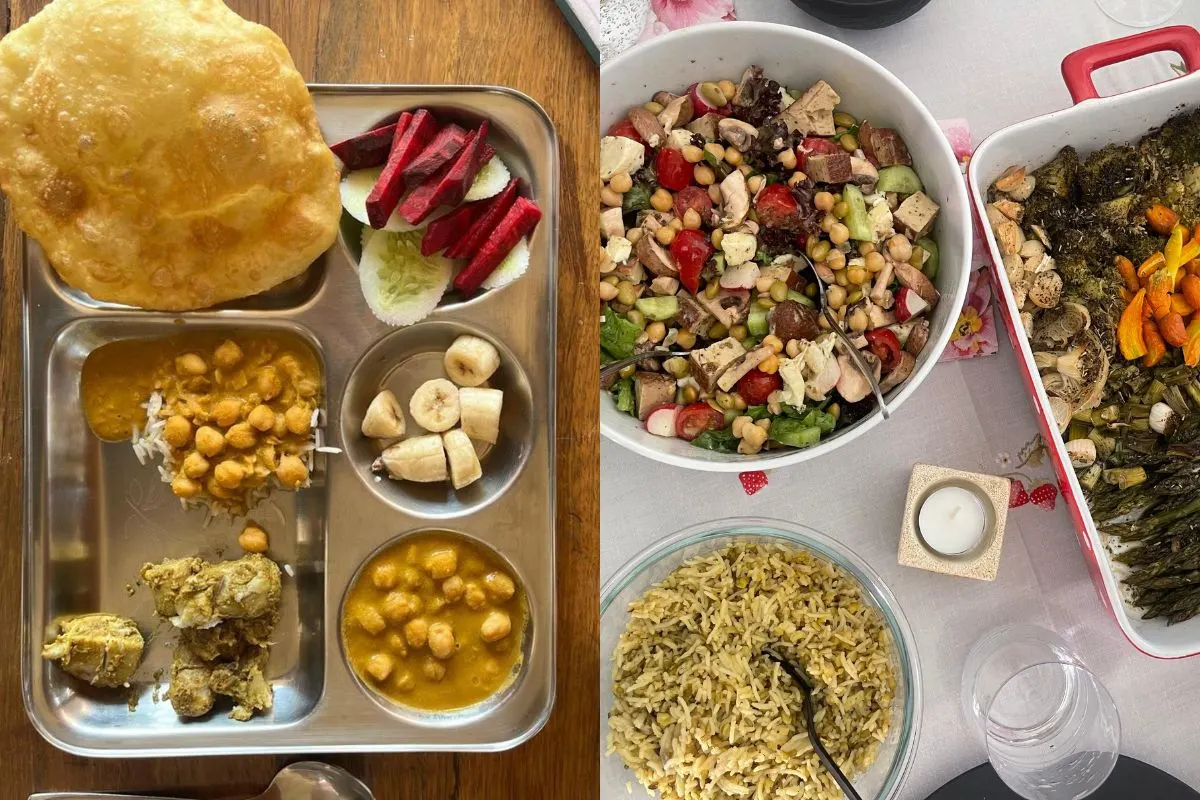
- Gluten-free diets – Indian recipes provide a good solution because of the use of rice and lentils (dal) as well as gluten-free flours such as besan (chickpea flour), jowar, and ragi. Many schools are able to provide gluten-free roti or simply serve rice. However, gluten-free options do not guarantee zero cross-contamination so it is important to inform the school and ask plenty of questions before booking if you suffer from celiac disease.
- Sattvic Food – Typically, ashrams provide this type of food as a standard, not a special request. Many yoga schools provide simple recipes that do not use onions and garlic. These schools also tend to offer seasonal produce.
How Specific Yoga Schools Handle Dietary Needs
Let’s take a look at a few of the Rishikesh schools we know best and see what they are doing with food and dietary accommodation.
- Yoga India Foundation incorporates Ayurvedic ideas into the fabric of their program and does not consider diet or food as an afterthought. Students receive daily classes as part of the curriculum to learn and understand the principles of Ayurvedic balance. School meals are Sattvic, meaning that meal options and combinations are vegan, gluten-free, or vegetarian. This leaves the students who are interested in holistic learning very room and flexible thinking to not only consider food preferences to be a slight adjustment to a daily preference at the school, but also to consider food flexibility to be part of the school’s learning philosophy.
- From reviews, Gyan Yog Breath has developed a thoughtful and accommodating reputation. Past students describe daily meals as innovative vegan and vegetarian options, including gluten-free parathas, homemade oat milk, peanut butter, and gluten-free extras, accompanied by a selection of regular parathas, bread, chapatis, and rice. Gyan Yog Breath is also an Ayurveda-oriented school with a menu of organic and Sattvic options.
Practical Tips Before You Book
- Directly email the school to inquire, “Can your kitchen prepare gluten-free meals daily? For celiac guests, how do you address dietary restrictions compared to requests that are preference-based?”
- Ask them to send a sample weekly menu — good schools are usually glad to provide this.
- Check the reviews that specifically mention food quality and dietary accommodation — reviews that are not general.
- Implement a gluten-free diet that includes backup food options (granola bars, protein powder) during the first few days of school, as the transition can take several days.
- Be as specific as you can when you refer to avoidance of gluten. Communicating that you “prefer less gluten” is far from the more serious “I have celiac and need strict avoidance.” Severe gluten avoidance is not taken as preference, and school will need this information to plan appropriately.
The Bottom Line
Rishikesh, as the self-proclaimed “Yoga Capital of the World,” generally handles vegan, gluten-free, and Sattvic dietary needs well — largely because traditional Indian and yogic eating already overlaps significantly with these categories. Schools like Yoga India Foundation and Gyan Yog Breath show that this can range from curriculum-integrated Sattvic philosophy to genuinely varied, allergy-aware daily menus. Accommodation quality still varies by school, so direct communication before you arrive remains the key to a smooth, nourishing experience.