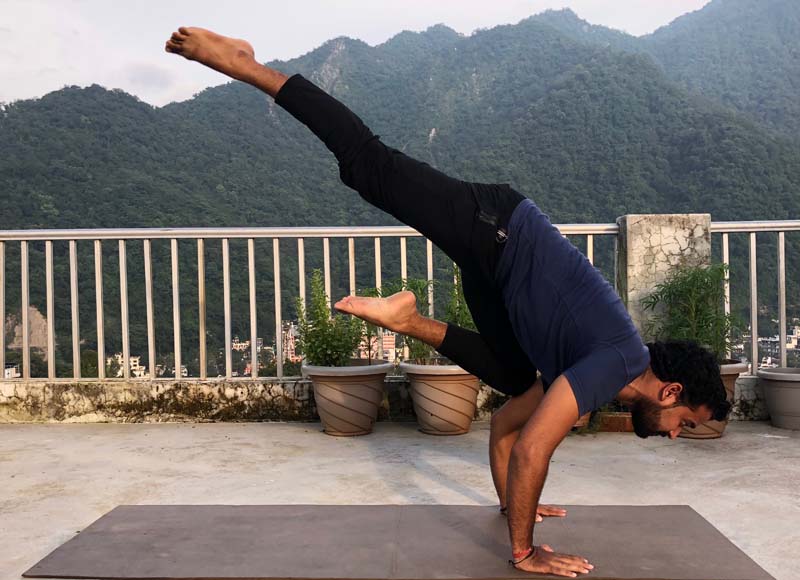
Eka Pada Koundinyasana I, often called One-Legged Sage Pose, is an arm balance that combines a deep twist, strong arms, an active core and a calm, focused mind. Eka means one, pada means foot or leg, and the pose is named after the sage Kaundinya. It looks complex, but it becomes much more approachable when you prepare for it step by step.
This post walks through a vinyasa sequence that opens the hips, warms the spine and builds core strength before you try the pose itself. It also covers how to enter the pose, common mistakes, benefits and precautions.
What is Eka Pada Koundinyasana I?
It is a twisting arm balance. The hands press into the floor, one thigh rests high on the back of the upper arm, the hips lift, and one leg extends while the torso stays rotated. The pose needs wrist strength, core control, hip mobility and a steady breath. It also needs patience, because balance in this pose rarely arrives on the first try.
Benefits of Eka Pada Koundinyasana I
- Strengthens the arms, wrists, shoulders and core
- Improves spinal rotation and hip mobility
- Develops balance and body awareness
- Builds focus and confidence in arm balances
Benefits vary from person to person. Practice at your own level and never force the shape.
Vinyasa Sequence to Prepare for Koundinyasana I
1. Opening and hip preparation
Begin by turning inward and creating space in the hips and hamstrings.
- Balasana (Child’s Pose): settle in, slow the breath and notice how the body feels today
- Uttana Pristhasana (Lizard Pose): opens the hips and builds the mobility needed for deep lunges and arm balances
- Prasarita Padottanasana (Wide-Leg Forward Fold): stretches the hamstrings and inner thighs
- Skandasana (Side Lunge): wakes up the adductors and adds dynamic hip opening
2. Standing poses, balance and twists
These poses warm up the obliques and train the twisting action you need in the final pose.
- Parivrtta Ardha Chandrasana (Revolved Half Moon Pose): a balancing twist that challenges core stability and focus
- Baddha Virabhadrasana (Bound Warrior Pose): stretches the shoulders while keeping the legs strong and grounded
- Utthita Parshvakonasana (Extended Side Angle Pose): lengthens the side body and builds leg strength
- Parivrtta Trikonasana (Revolved Triangle Pose): a key twist in this sequence, and a good test of balance and flexibility
3. Preparing for the arm balance
- Malasana (Yogi Squat): opens the hips and teaches you to stay low and steady
- Bakasana (Crow Pose): the base for most arm balances, where you learn to lift, engage the core and trust your weight on your hands
How to Do Eka Pada Koundinyasana I
- Come into a deep squat, such as Malasana, with your feet close together
- Twist your torso to one side and bring the opposite upper arm outside the knee
- Place both hands on the floor, shoulder-width apart, with fingers spread
- Rest the side of the upper thigh high on the back of your upper arm
- Shift your weight forward into your hands and lift your feet one at a time
- Straighten one leg while the other stays bent, and keep your hips lifted and your core firm
- Breathe steadily for a few breaths
- Bend the leg, lower the feet to the floor and come out with control
If you are not sure about the exact alignment, ask a qualified teacher to check it, because small adjustments change this pose a lot.
Common Mistakes
- Jumping into the pose before the wrists and core are warm
- Holding the breath
- Letting the elbows flare out instead of hugging in
- Looking down at the feet instead of forward
- Forcing the leg out before the base feels steady
Tips and Modifications
- Place a block or folded blanket in front of you to practice lifting without fear of falling
- Practice Bakasana first, then try one-sided twisted versions with the feet on the floor
- Take as many breaths as you need, and rest between attempts
Precautions
Avoid or modify this pose if you have wrist, elbow or shoulder injuries, neck problems, high blood pressure or a recent abdominal surgery, or if you are pregnant. Speak with a doctor and a qualified teacher if you are unsure.
Wind-Down Sequence
After the peak pose, give the body time to unwind.
- Legs in the Air (Dead Bug Variation): releases tension in the hips and lower back
- Urdhva Dhanurasana (Wheel Pose): a heart-opening counter to the forward-leaning arm balance. Skip it if it does not feel comfortable
- Supta Matsyendrasana (Reclined Spinal Twist): soothes the spine and eases the body after the twists
- Ananda Balasana (Happy Baby Pose): a soft, playful way to close the active part of the practice
- Savasana (Corpse Pose): full rest, so the body can absorb the practice
Frequently Asked Questions
It is a twisting arm balance where the thigh rests on the back of the upper arm, the hips lift and one leg extends while the hands support the body.
Yes, it needs wrist strength, core control and hip mobility. Beginners should start with Malasana and Bakasana and move forward gradually.
Lizard Pose, Side Lunge, Revolved Half Moon, Revolved Triangle, Malasana and Bakasana all build the strength and mobility the pose needs.
Hold it for a few steady breaths. Come out as soon as the form or the breath starts to break down.
Anyone with wrist, shoulder or neck injuries, high blood pressure, recent abdominal surgery or pregnancy should avoid it or get guidance first.
Final Thoughts
The path to Eka Pada Koundinyasana I is not a straight line. Some days the body feels light and ready, and other days it prefers to stay close to the ground. Both are part of the practice. Showing up with patience matters more than getting your feet off the floor.
Sequencing, alignment and safe progressions for arm balances like this are covered in a 200 hour yoga teacher training in India, and more advanced asana study continues in the 300 hour yoga teacher training in India. You can also read more yoga articles on our blog, browse the YTT FAQ or contact us with questions.