
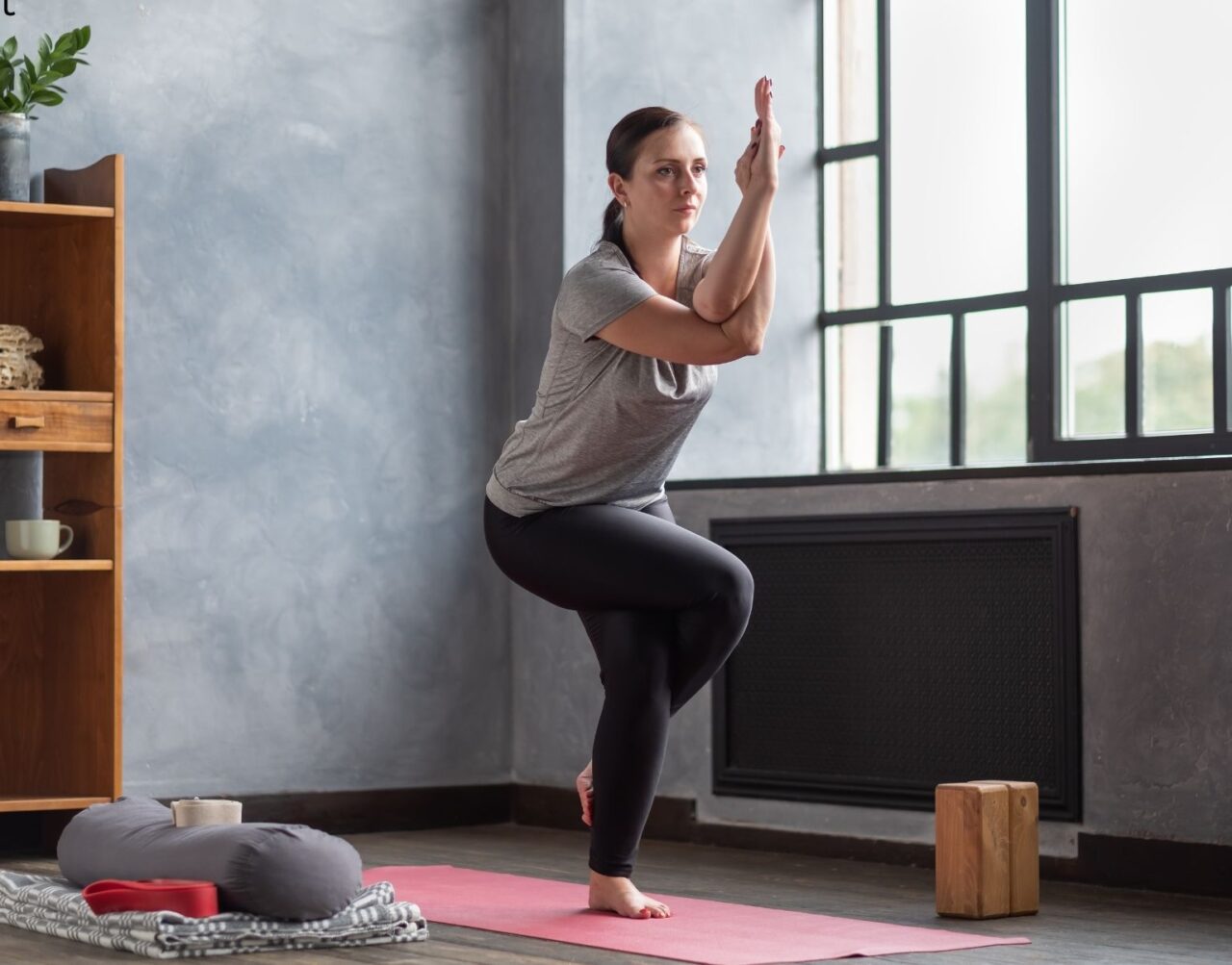
Garudasana, also known as Eagle Pose, is a classic standing balance posture in Hatha Yoga. This powerful asana builds stability, improves concentration, stimulates the lymphatic system, and supports nervous system regulation.
The Sanskrit word Garuda means eagle — symbolizing strength, alertness, precision, and grounded power. In traditional Hatha Yoga, Garudasana teaches control within compression and steadiness within challenge.
What is Garudasana (Eagle Pose)?
Garudasana is a one-legged balance pose where the arms and legs are wrapped tightly around each other. This unique structure creates:
- Deep muscular engagement
- Cross-body activation
- Proprioceptive stimulation
- Increased concentration
- Strong grounding through the standing leg
Eagle Pose combines balance, compression, and focused breath control — making it both physically demanding and neurologically regulating.
Benefits of Garudasana (Eagle Pose)
1. Nervous System Regulation
- Activates fascia and joint receptors
- Increases body awareness
- Supports parasympathetic regulation when combined with slow breathing
2. Lymphatic and Circulatory Support
- Fresh blood flow returns to tissues
- Circulation improves
- Lymphatic drainage is stimulated
- Fluid stagnation is reduced
3. Physical Benefits of Eagle Pose
- Strengthens ankles, calves, and thighs
- Improves balance and coordination
- Stretches shoulders and upper back (Eagle Arms)
- Activates deep stabilizing muscles
- Improves posture and pelvic alignment
- Enhances joint awareness
4. Mental and Emotional Benefits
- Concentration
- Mental clarity
- Emotional steadiness
- Patience under pressure
- Focused presence
How to Practice Garudasana (Step-by-Step)
Step 1 – Start in Tadasana
Stand tall. Shift your weight onto your left foot. Engage the core and lengthen your spine.
Step 2 – Wrap the Legs
Bend your left knee slightly. Cross your right thigh over the left. Hook the right foot behind the left calf if possible.
Step 3 – Wrap the Arms
Extend the right arm forward. Bring the left arm underneath and wrap the forearms together. Press palms or backs of hands together.
Step 4 – Align the Pelvis
Draw the navel gently inward and lengthen the tailbone down to avoid a hollow lower back. Keep the spine neutral.
Step 5 – Stabilize and Breathe
Distribute weight evenly across the standing foot. Press arms and legs lightly toward each other. Hold for several steady breaths.
Repeat on the other side
Energetic Perspective in Hatha Yoga
- Balances Ida and Pingala (left and right energy channels)
- Strengthens grounding energy
- Encourages internal equilibrium
- Integrates effort with controlled breath
Contraindications
- Recent ankle, knee, shoulder, or elbow injuries
- Balance disorders
- Pregnancy (due to compression and fall risk)
The Importance of Learning Garudasana with an Experienced Teacher
- Proper alignment and joint protection
- Safe progression
- Understanding of breath coordination
- Awareness of nervous system regulation
- Integration of traditional Hatha Yoga principles