Yoga has become a global phenomenon. It is practiced in gyms, studios, retreat centers, hospitals, and homes all over the world. With this popularity comes a wide range of yoga styles, each offering something slightly different. For someone new to yoga—or even for experienced practitioners—this diversity can feel overwhelming. Is yoga supposed to be slow or fast? Physical or meditative? Spiritual or therapeutic?
To understand modern yoga styles, it is helpful to step back and look at where yoga comes from, how it developed, and why these styles exist in the first place. Yoga was never meant to be a single rigid method. It is a living tradition that has adapted over centuries. At the same time, not all yoga styles are equal in terms of lineage, intention, and depth.
This article explains the most important yoga styles in detail, explores their origins and focus, and helps you understand which style may be most suitable for your body, mind, and deeper aspirations.
Is it useful to distinguish between yoga styles?
Yes, distinguishing between yoga styles is useful, but only if it is done with understanding rather than judgment. Yoga styles are not competing systems; they are different methods addressing different needs. Some people come to yoga for physical health, others for emotional balance, and others for inner clarity and self-realization. Different styles emphasize different entry points.
However, it is important to remember that yoga is not defined by style. Yoga is defined by awareness. Styles are tools, not goals. When styles become rigid labels or identities, yoga can lose its essence. When they are understood as skillful means, they can support genuine growth.
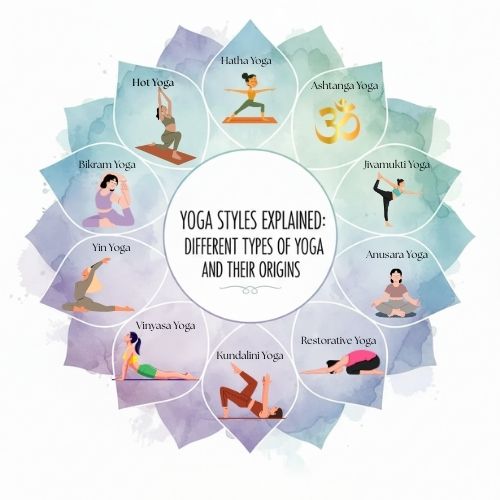
An overview of the ten most important yoga styles
The following styles are among the most widely practiced today. While they may appear very different externally, most of them ultimately derive from Hatha Yoga and modern reinterpretations of traditional practices.
1. Hatha Yoga
Hatha Yoga is the foundation of almost all physical yoga practices known today. Traditionally, the word “Hatha” does not refer to a gentle or beginner-level practice, as it is often misunderstood in the modern context. Classical Hatha Yoga is a comprehensive system designed to purify and prepare the body and nervous system for higher states of awareness.
Historically, Hatha Yoga developed as a preparatory path for Raja Yoga, the yoga of the mind, as described in texts such as the Yoga Sutras of Patanjali. The purpose of practicing asana, pranayama, cleansing techniques, and disciplined lifestyle habits was not fitness, but stability, clarity, and inner balance. A steady body supports a steady mind.
In modern classes, Hatha Yoga is usually practiced at a moderate pace, with postures held longer and transitions done consciously. This allows practitioners to feel alignment, breath, and inner response more clearly. A well-taught Hatha Yoga class integrates posture, breath, and awareness without rushing, creating a strong foundation for both physical health and meditative depth.
For students who are interested in yoga as a holistic system rather than a workout, Hatha Yoga offers a direct connection to the roots of the tradition. It is especially suitable for those who want to understand how physical practice supports mental discipline and inner stillness.
2. Iyengar Yoga
Iyengar Yoga developed from the teachings of B.K.S. Iyengar and is known for its emphasis on precision, alignment, and structural intelligence. This style treats the body as a highly intelligent system that can be educated through careful observation and adjustment.
Postures in Iyengar Yoga are often held for longer periods, allowing students to explore subtle actions within the body. Props such as blocks, belts, bolsters, and chairs are used extensively, not to make poses easier, but to make them more accurate and accessible. This makes Iyengar Yoga particularly valuable for people with injuries, chronic conditions, or limited mobility.
Beyond the physical benefits, Iyengar Yoga cultivates discipline, patience, and attention to detail. The mind is trained to stay with sensation and alignment rather than drifting. While the practice may appear technical, its deeper intention aligns with classical yoga: developing steadiness and clarity that eventually support meditation.
3. Vinyasa Yoga
Vinyasa Yoga is one of the most popular modern yoga styles, especially in the West. It is characterized by fluid movement synchronized with breath, often described as a “flow.” Unlike traditional systems, Vinyasa does not follow a fixed sequence. Each class can be creatively structured by the teacher.
This style emphasizes continuity, rhythm, and cardiovascular engagement. It can feel expressive, athletic, and sometimes dance-like. Because of its flexibility, Vinyasa Yoga varies greatly depending on the teacher’s background and intention. Some classes are deeply mindful and intelligent, while others are closer to fitness-based movement.
Vinyasa Yoga developed less than a century ago and draws inspiration from Ashtanga Yoga, modern gymnastics, and contemporary body movement. While it can be an excellent way to build strength and coordination, its depth depends heavily on how consciously it is taught and practiced.
4. Ashtanga Yoga
Ashtanga Yoga is a highly structured and demanding system that follows a fixed sequence of postures. Traditionally taught in the Mysore style, students learn the sequence gradually and practice at their own pace under the guidance of a teacher.
This method builds heat, strength, flexibility, and stamina while cultivating discipline and focus. The repetitive nature of the practice creates a strong internal rhythm and can become meditative through consistency. Because the sequence never changes, practitioners develop an intimate relationship with their own patterns, limitations, and resistance.
Ashtanga Yoga, in its modern form, was systematized in the 20th century, although it claims inspiration from older texts. It is physically intense and not suitable for everyone, but for those drawn to structure and daily discipline, it can be transformative.
5. Jivamukti Yoga
Jivamukti Yoga combines dynamic physical practice with spiritual teachings, music, chanting, and ethical themes. It explicitly integrates philosophy into each class, often addressing topics such as compassion, nonviolence, and environmental responsibility.
Classes are usually vigorous and creatively sequenced, accompanied by music that ranges from traditional chants to contemporary songs. The intention is not only to move the body but to engage the heart and conscience.
Jivamukti Yoga is a modern style that appeals to practitioners who want yoga to be a lifestyle and a form of activism. While its expression is contemporary, it draws inspiration from classical yogic ideas about liberation and responsibility.
6. Bikram Yoga and Hot Yoga
Bikram Yoga consists of a fixed sequence of twenty-six postures practiced in a heated room. Hot Yoga is a broader term that refers to any yoga practice done in elevated temperatures.
The heat is intended to increase flexibility and induce sweating, which some believe supports detoxification. Classes are physically intense and can be challenging, especially for beginners or people with cardiovascular issues.
This style focuses primarily on physical endurance and discipline. While it can offer tangible physical benefits, it generally places less emphasis on meditation, philosophy, or subtle awareness.
7. Anusara Yoga
Anusara Yoga blends precise alignment principles with a heart-centered philosophical outlook rooted in non-dual Tantra. The practice emphasizes openness, positivity, and the belief that life is fundamentally benevolent.
Postures are taught with clear biomechanical principles, making the practice both safe and expressive. Teachers often weave philosophical reflections into class, encouraging students to see yoga as a way of relating to life with greater openness.
Anusara Yoga is modern in origin but seeks to integrate technical skill with emotional and spiritual meaning.
8. Kundalini Yoga
Kundalini Yoga focuses on awakening inner energy through specific combinations of posture, breath, sound, and meditation. Classes often include repetitive movements, powerful breathing techniques, chanting, and extended periods of stillness.
This style works strongly on the nervous system and emotional body. Experiences can be intense and transformative, which is why careful guidance is important. Kundalini Yoga is less concerned with perfect alignment and more focused on energetic shifts and inner awareness.
9. Yin Yoga
Yin Yoga is slow, quiet, and deeply introspective. Postures are held for several minutes with relaxed muscles, targeting the connective tissues and joints rather than muscular strength.
The stillness of the practice encourages introspection and emotional processing. Yin Yoga complements more dynamic practices and is particularly beneficial for people dealing with stress, overstimulation, or emotional fatigue.
10. Restorative Yoga
Restorative Yoga is a practice of deep rest. Postures are fully supported with props, allowing the body to relax completely. The nervous system shifts into a parasympathetic state, supporting healing and regeneration.
This style is especially helpful for recovery from illness, burnout, or chronic stress. It teaches an often-overlooked yogic skill: the ability to rest without guilt or effort.
How to find your own yoga style
Finding the right yoga style is not about choosing the most popular or challenging option. It is about listening honestly to your needs at this moment in your life. Some people need movement and strength, others need stillness and grounding. These needs can change over time.
Trying different styles with qualified teachers is often the best way to discover what truly supports you.
FAQ -
Which yoga style is the best?
There is no universally “best” yoga style. The best style is the one that supports your physical health, mental clarity, and inner balance without causing strain or confusion.
Which yoga style is best for beginners?
Hatha Yoga, Iyengar Yoga, and gentle Yin-based practices are often the most suitable for beginners because they allow time to understand posture, breath, and awareness.
Which yoga style is closest to traditional yoga from India?
If by “traditional” we mean yoga as it developed in India as a path toward mental discipline and self-realization, then Hatha Yoga is the most appropriate foundation. Classical Hatha Yoga was designed to prepare the body and nervous system for Raja Yoga, the yoga of the mind, as described in the Yoga Sutras of Patanjali.
It is important to understand that yoga asana, in its traditional context, was never an end in itself. Postures existed to support meditation, concentration, and ethical living. From this perspective, Hatha Yoga is not merely a physical practice but a bridge between the body and higher mental disciplines.
Are modern yoga styles traditional?
Most modern yoga styles, including Vinyasa, Ashtanga as practiced today, Jivamukti, Anusara, Yin, and Hot Yoga, are relatively new. Many of them are less than 100 years old. They are creative reinterpretations of yoga adapted to modern bodies, lifestyles, and cultural contexts.
Is it possible to practice traditional yoga with modern understanding?
Yes. For students who seek a traditional approach while benefiting from modern biomechanics and anatomical knowledge, Hatha Yoga offers the most balanced path. When taught skillfully, Hatha Yoga honors the original intention of yoga while integrating contemporary insights about the body. This makes it especially suitable for long-term, sustainable practice rooted in awareness rather than performance.